This content was aggregated from local dealer data and insights provided by the USA Today Network Automotive Insights team using Google Gemini and the Vehicles for Sale near Des Moines marketplace writing team.
Electric vehicles can be practical for many Des Moines drivers, but the answer depends on your daily mileage, charging access, travel habits, budget, and winter-driving expectations. An EV that fits easily into one household’s routine may require more planning for another driver who travels longer distances or lacks convenient home charging.
Vehicles For Sale Near Des Moines gives Iowa shoppers a starting point for researching electric cars in Des Moines and comparing them with gasoline vehicles, hybrids, and plug-in hybrids.
Charging access is one of the most important parts of that decision. Research on EV adoption has found that public fast-charging availability can influence consumers’ willingness to adopt electric vehicles, particularly where charging convenience is a concern.
Range and ownership costs also deserve context. Research using real-world EV deployments shows that energy efficiency and operational range can vary with factors such as temperature, congestion, and operating conditions.
For Des Moines shoppers, the most useful question is therefore not simply, “How far can this EV travel?” Instead, ask whether its practical range and charging options fit the way you actually drive.
Electric vehicles come in several categories, including sedans, compact crossovers, SUVs, and trucks.
Before comparing specific vehicles, establish your priorities.
Consider:
Daily commuting distance
Passenger capacity
Cargo requirements
Home charging availability
Public charging needs
Highway travel
Winter driving
Purchase budget
Expected annual mileage
Technology preferences
A driver who travels a predictable route around Des Moines and can charge overnight at home may find EV ownership relatively straightforward.
Another driver who lives in a building without dedicated charging or frequently drives long distances may need to rely more heavily on public infrastructure.
That difference can be more important than simply choosing the EV with the largest battery.
Electric vehicles can charge at different speeds depending on the charging equipment and vehicle.
Broadly, shoppers may encounter:
Standard household charging
Higher-power home charging
Public AC charging
DC fast charging
The actual charging speed can depend on:
Charger output
Vehicle charging capability
Battery temperature
Battery state of charge
Battery-management settings
Public fast charging matters for longer trips because it can add substantial energy faster than lower-power charging.
Research on fast-charging infrastructure suggests that greater access can improve consumer acceptance of EVs by reducing concerns about charging availability.
When comparing vehicles, do not look at charging speed in isolation. Consider where you expect to charge and how often you will need faster public charging.
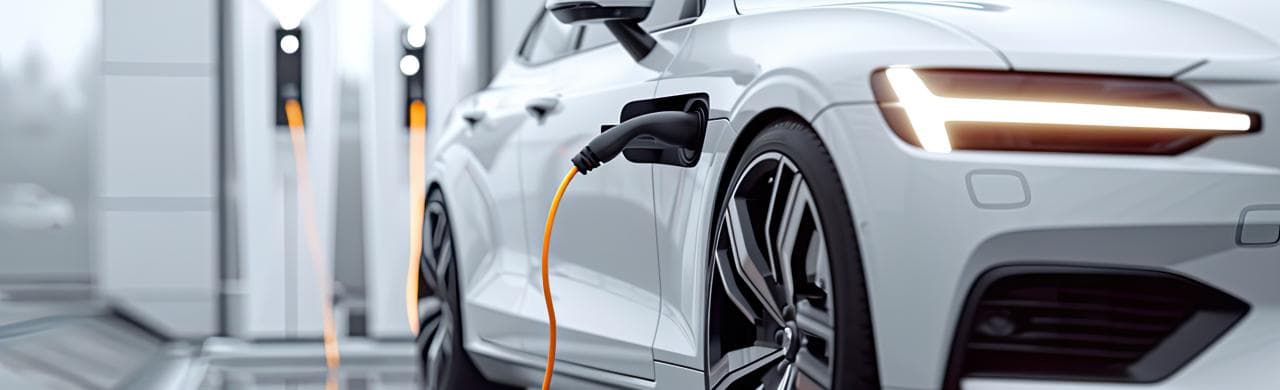
For many EV owners, home charging can be the easiest way to keep the vehicle ready for everyday driving.
Instead of visiting a fueling station, you may be able to plug in when you arrive home and begin the next day with enough energy for your normal commute.
Before purchasing, ask:
Where will I park overnight?
Is electrical service available near the parking location?
Can charging equipment be installed?
Does the property owner or association have requirements?
Will I rely primarily on public charging?
The best charging arrangement fits naturally into your routine.
If home charging is not available, evaluate workplace and public charging before committing to an EV.
Public charging can become particularly important for drivers who take longer trips or cannot charge at home.
Useful charging locations may include:
Shopping centers
Parking facilities
Workplaces
Highway travel corridors
Public fast-charging locations
However, the total number of chargers in Iowa is less important than whether useful chargers exist along the routes you actually drive.
Research on EV adoption broadly identifies charging accessibility as a major factor shaping consumer perception and long-term adoption.
Before selecting an EV, map your regular routes and identify where you could charge if home charging were unavailable or if you needed extra range on a trip.
An EV still needs to work as a car.
Do not focus so heavily on battery specifications that you overlook passenger space, cargo room, visibility, and comfort.
Compare:
Number of seats
Rear-seat room
Cargo capacity
Ride quality
Driver visibility
Infotainment
Driver-assistance features
Climate controls
Charging-port location
A compact electric crossover may work well for commuting and everyday errands. A larger EV may make more sense for families or drivers who routinely carry substantial cargo.
The best EV is the one that satisfies both your transportation needs and your charging requirements.
Range is one of the most important specifications EV shoppers compare, but it should not be interpreted as a guarantee.
Real-world driving range can vary with:
Temperature
Speed
Driving style
Heating and air conditioning
Vehicle load
Road conditions
Tire pressure
Battery condition
Research on electric-vehicle operation confirms that colder temperatures can reduce efficiency and range, making seasonal planning particularly relevant in northern climates.
For Des Moines drivers, winter range deserves special attention.
Start with your actual mileage rather than simply shopping for the longest range available.
Ask yourself:
How many miles do I typically drive per day?
What is my longest regular commute?
How often do I take longer highway trips?
Can I charge overnight?
Is workplace charging available?
If your normal daily travel represents only a fraction of a vehicle’s practical range, you may not need the largest available battery.
A larger battery can provide additional flexibility, but it may also affect:
Vehicle price
Weight
Charging time
Efficiency
The most suitable range gives you enough flexibility without forcing you to pay for capability you rarely use.
Cold-weather performance matters in Des Moines.
Research on electric-vehicle operations recommends accounting for cold-temperature effects when evaluating year-round range because lower temperatures can reduce energy efficiency.
Cold weather can affect EV efficiency for several reasons.
Energy may be used to:
Heat the passenger cabin
Warm the battery
Maintain battery operating temperature
Run defrosting systems
A review of electric-mobility challenges similarly notes that cabin heating and battery thermal-management systems can use substantial battery energy during cold periods, potentially reducing driving range.
That does not make EVs impractical for Iowa. It means shoppers should leave more range margin during winter.
Some features can improve winter comfort or efficiency.
Depending on the vehicle, shoppers may encounter:
Heated seats
Heated steering wheel
Battery preconditioning
Remote climate control
Heat-pump systems
Heated mirrors
Windshield defrosting
Feature availability varies by model and trim.
Preconditioning can be especially useful when a vehicle is still connected to a charger because it can warm the cabin or battery before driving.
Do not assume every EV offers the same winter-management technology. Verify what is installed on the specific vehicle you are considering.
EV range can also change according to driving speed.
Higher sustained speeds generally increase aerodynamic energy demand, which can reduce efficiency compared with slower urban driving.
That matters for Des Moines drivers who frequently travel on highways rather than using the vehicle only for local trips.
When comparing range, think about:
City commuting
Interstate driving
Weekend travel
Family road trips
A driver whose mileage consists mostly of short local trips may experience different energy consumption from someone who routinely travels longer highway distances.
Research using real-world EV fleet data has shown that operational range depends on multiple factors rather than a single fixed specification.
Possibly, but there is no universal answer.
EV ownership costs can include:
Purchase price
Financing
Electricity
Insurance
Tires
Maintenance
Registration
Charging equipment
Depreciation
Some research comparing vehicle technologies has found that EVs can achieve lower lifetime total cost of ownership under certain assumptions, partly because of lower energy and maintenance expenses. However, higher initial purchase prices and uncertainty around battery-related costs can affect that result.
This means shoppers should calculate costs using their own situation rather than assuming an EV will automatically cost less.
Where you charge can influence your energy expenses.
A driver who charges mainly at home may face different costs from someone who relies heavily on public fast charging.
Before purchasing, estimate:
Home electricity price
Expected vehicle efficiency
Annual mileage
Public charging frequency
Charger installation cost
Charging-fee research also suggests that infrastructure pricing can influence total ownership cost and consumers’ perception of EV value.
If savings are one of your main reasons for switching to electric, use realistic electricity and charging costs rather than the lowest theoretical rate.
Incentives can change the effective cost of purchasing or leasing an EV, but programs can change over time and may have specific eligibility requirements.
Possible incentive categories can include:
Federal programs
State programs
Utility programs
Manufacturer offers
Charging-equipment incentives
Research on electric mobility shows that incentives and policy frameworks can influence EV adoption and consumer economics.
However, this page does not list specific Iowa or Des Moines incentives because live incentive data was not provided.
Before budgeting for a purchase, verify the current program, eligible vehicle, buyer requirements, expiration date, and whether the incentive applies at purchase or later.
Battery-electric vehicles do not have a conventional gasoline engine, so several routine engine-maintenance tasks are eliminated.
For example, a BEV does not require traditional:
Engine-oil changes
Spark plug replacement
Exhaust-system maintenance
However, electric vehicles still require maintenance.
That can include:
Tires
Brakes
Suspension
Cabin filters
Wipers
Cooling and thermal-management systems
Manufacturer-specified inspections
Research on long-term EV operation emphasizes that maintenance practices, software, diagnostics, and battery-management strategies remain important to vehicle longevity.
EVs should therefore be considered lower-maintenance in some areas—not maintenance-free.
Used EVs can provide another entry point into electric driving, but battery condition becomes particularly important.
When shopping used, investigate:
Battery warranty
Current battery-health information, if available
Displayed range
Charging performance
Model year
Mileage
Vehicle history
Thermal-management system
Battery degradation can affect how much energy the vehicle stores compared with when it was new.
Research on EV longevity also identifies battery aging and charging management as important considerations for long-term vehicle operation.
Evaluate the individual vehicle rather than assuming every used example of the same EV model will deliver identical range.
Electric vehicles can feel noticeably different from gasoline vehicles.
Electric motors can respond quickly, while regenerative braking may let the vehicle slow more strongly when you lift off the accelerator.
During your test drive, evaluate:
Acceleration
Regenerative braking
Steering
Ride comfort
Visibility
Cabin noise
Climate controls
Infotainment
Charging information
Seating
If the vehicle offers selectable regenerative-braking modes, try them when practical.
Also explore the charging menus and battery information so you understand what the vehicle displays during daily use.
Switching to electric works best when charging and range fit your lifestyle naturally.
Before making the move:
Calculate your average daily mileage.
Determine where you will charge.
Check realistic winter range.
Compare passenger and cargo space.
Estimate electricity costs.
Review insurance.
Verify current incentives.
Test-drive your leading options.
Review battery and warranty information.
Research on EV adoption consistently identifies charging access, range concerns, total cost of ownership, and consumer understanding as important factors influencing adoption.
The goal should be to choose an EV that makes everyday transportation simpler—not one that forces you to redesign your life around charging.
Vehicles For Sale Near Des Moines gives shoppers a starting point for researching electric cars in Des Moines, from practical commuter vehicles to larger crossovers and SUVs as available.
Start with your driving routine.
If you have predictable daily mileage and reliable home charging, EV ownership may be relatively straightforward. If you expect to rely primarily on public EV charging in Iowa, spend more time evaluating station locations, charging speeds, travel routes, and potential charging costs.
Remember that climate and operating conditions affect range. Real-world EV research shows that colder temperatures can reduce efficiency, while charging access and cost remain important parts of ownership planning.
No electric vehicle is universally right for every Des Moines driver.
Explore electric cars in Des Moines today and compare available EVs based on range, charging capability, winter performance, passenger space, ownership costs, and your everyday driving requirements.
They can be, but cold temperatures can reduce efficiency and driving range. Research using real-world EV data recommends accounting for cold-weather range losses when planning year-round vehicle use. Choosing an EV with appropriate range margin and useful cold-weather features can make winter ownership easier.
Not necessarily. Public or workplace charging can support EV ownership, but home charging can make daily use more convenient. Research on EV adoption consistently identifies charging access as an important factor in consumer acceptance.
Base the decision on your actual daily driving, longest regular trips, winter conditions, and access to charging. More range can provide flexibility, but you may not need the largest available battery if your daily mileage is modest and charging is convenient.
Potentially. EVs may offer lower energy and maintenance expenses, but total cost also depends on purchase price, charging costs, insurance, depreciation, battery considerations, annual mileage, and incentives. Research comparing vehicle technologies has found EVs can have competitive lifetime ownership costs under some assumptions.
Compare practical range, charging speed, home and public charging access, winter performance, passenger space, battery warranty, insurance, electricity costs, and current incentives. If shopping used, review available battery-health information and charging performance as well.
Written for https://vehiclesforsaleneardesmoines.com
By the USA TODAY Network Automotive Insights Team, in collaboration with Vehicles for Sale near Des Moines and the Vehicles For Sale Near Des Moines Register Edition.
Disclaimer: This article's content is intended for informational purposes only. Vehicle specifications and features are based on data provided by J.D. Power and local dealerships and may vary by individual vehicle, VIN, trim, configuration, packages, and optional equipment. Vehicle images may not depict the exact model, trim, features, packages, accessories, or specifications described. Vehicle pricing, availability, features, and specifications are subject to change without notice. Please reference the dealership's vehicle listing and window sticker or consult the dealership directly for complete and accurate details.